 HandheldPicks
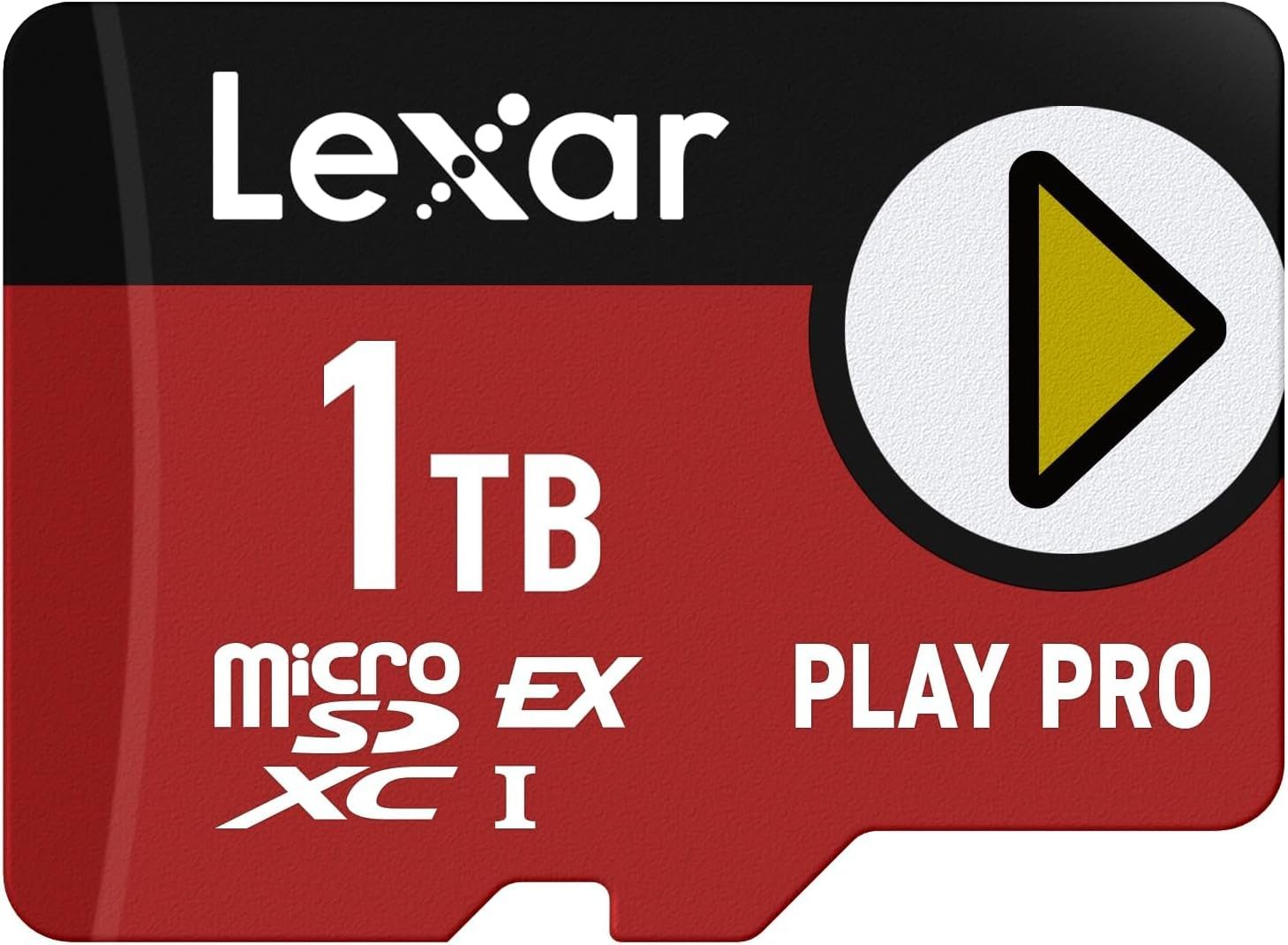
Lexar Play 1TB microSDXC Review — Next-gen storage tech finally arrives for handhelds, bringing impressive performance to a micro form factor, but early adopters are forced to pay a steep premium
⚡ TL;DR
The MicroSD Express technology provides a noticeable bump in load times for Switch 2 users going all-digital. However, at roughly $180-$220, it costs twice as much as a portable SSD and suffers from real-world bottlenecks that prevent it from hitting its 900MB/s theoretical speed
◈ Verdict: Depends on Use Case
What people are saying
Sources disclosed below
Pros
- +Massive 1TB storage capacity in a micro form factor
- +Next-gen MicroSD Express technology enables SSD-like theoretical speeds
- +Faster game load times on the Nintendo Switch 2 compared to physical cartridges
- +Verified legitimate capacities with around 930GB of usable space for the 1TB model
Cons
- −Extremely expensive, costing nearly twice as much as a portable 1TB SSD
- −Severe availability and stock issues at launch
- −Real-world Switch transfer speeds fall far short of the 900MB/s advertised theoretical maximums
- −Does not include an SD card adapter in the box
- −Slightly lower usable storage capacity compared to rival brands like Samsung
Marcus Chen
Published April 30, 2026
$79–$99
Price may vary. Updated regularly.
Lexar’s new 1TB MicroSD Express card promises to turn your handheld into a high-speed vault, packing SSD-like performance into a chip the size of a fingernail. It sounds like the holy grail for digital hoarders, but once you peel back the marketing stickers, you’ll find that the reality is significantly more complicated—and expensive—than the spec sheet suggests.
What you're actually getting
When you hold this card, you’re holding the bleeding edge of storage tech. Lexar is leaning hard into the MicroSD Express standard, which theoretically bridges the gap between sluggish traditional cards and the snappy performance of an internal SSD. As Gio San Pedro put it, "Small as a fingernail, fast as an SSD." It’s a compelling pitch for anyone tired of staring at loading screens on their Switch 2.
However, you need to be prepared for the "early adopter tax." This card isn't just a storage upgrade; it’s a luxury item. CantoHouse was blunt about the financial sting, noting, "I did pay a pretty penny for these." When you compare the price-per-gigabyte of this card against a standard portable SSD, the math gets ugly fast. You are paying a massive premium for the convenience of keeping that storage inside your console rather than dangling off the back of it.
Furthermore, don't expect the 900MB/s speeds plastered on the box to translate to your daily gaming sessions. While the technology is capable of high throughput, the current hardware ecosystem—including the Switch 2—creates bottlenecks that bring those speeds back down to earth. You’re getting a high-quality, reliable 1TB card, but you aren't getting the revolution in speed that the marketing department wants you to believe.
Performance — what reviewers actually measured
The gap between theoretical maximums and real-world performance is wide. Here is how the Lexar Play actually stacks up in the wild.
| Metric | Value | Context |
|---|---|---|
| Advertised Read | 900 MB/s | Theoretical max |
| Real Read Speed | 99 MB/s | Switch 2 testing |
| Real Write Speed | 87 MB/s | Switch 2 testing |
| Usable Storage | 928-932 GB | Formatted capacity |
| Mario Kart Load | 19 seconds | Real-world test |
Where it actually wins
The primary victory here is density. Getting 1TB of reliable, high-speed storage into a single slot is a massive quality-of-life upgrade for anyone who refuses to swap cartridges. If you’re the type of player who wants their entire library installed and ready to go at a moment's notice, the sheer convenience of having 930GB of usable space is hard to overstate.
It also performs admirably when it comes to reliability. Memory Wolf pointed out that "the actual usable capacity is rarely what it says on the label," but the Lexar card hits that 930GB mark consistently. It’s a stable, well-built piece of silicon that won't corrupt your save files or fail during a massive game update. For a device that lives inside your console, that peace of mind is worth something.
Where it falls short
The biggest failure is the price-to-performance ratio. If you’re expecting a transformative jump in load times that justifies a cost nearly double that of a standard high-end microSD card, you’re going to be disappointed. The real-world read speeds of around 99MB/s are better than budget cards, but they aren't the generational leap that the "Express" branding implies.
Then there is the sting of the unboxing experience. For a premium-priced product, the lack of an SD card adapter is a petty oversight. It’s a small piece of plastic that costs pennies to manufacture, yet its absence is a constant annoyance if you need to move files from your PC to your handheld. It feels like Lexar is cutting corners on the accessories while charging a premium for the core tech.
Should you buy it?
Buy if you
- Are an all-digital gamer who demands the maximum possible storage capacity for your Switch 2.
- Value the convenience of internal storage over the lower cost of external SSDs.
- Have the budget to pay a premium for the latest, most compact storage technology.
Skip if you
- Are looking for the best value for your money.
- Can live with slightly slower load times by using a standard, cheaper UHS-I card.
- Are a casual player who doesn't mind swapping physical cartridges to save a hundred dollars.
It delivers next-gen storage speeds for the Switch 2, but the steep early-adopter tax makes it a luxury purchase.
Sources consulted
- Gio San Pedro — 1 Terabyte. 900MB/s. How Is This Possible?! Lexar Play Pro for Nintendo Switch 2 | MicroSD Express
- CantoHouse — Nintendo Switch 2: Lexar 1TB Micro SD Express Card | Unboxing, Installing Games, Speed Test & Review
- Digital David — Lexar PLAY 1TB microSDXC UHS-I-Card Benchmark Review
- Memory Wolf — Lexar PLAY PRO 512GB microSD Express Review: Nintendo Switch 2
Synthesis combines independent reviews above. Verdicts and quotes attributed to original creators. Affiliate disclosure: we may earn a commission from qualifying purchases via Amazon links.
Products covered in this review
Frequently Asked Questions
Is the Lexar Play 1TB microSDXC worth buying?
The MicroSD Express technology provides a noticeable bump in load times for Switch 2 users going all-digital. However, at roughly $180-$220, it costs twice as much as a portable SSD and suffers from real-world bottlenecks that prevent it from hitting its 900MB/s theoretical speeds.
Who is the Lexar Play 1TB microSDXC best for?
Hardcore Nintendo Switch 2 owners going all-digital who want maximum capacity and the fastest possible load times.
Who should skip it?
Budget-conscious gamers and casual players who can settle for cheaper, standard UHS-I micro SD cards.