 HandheldPicks
Baseus 65W GaN USB-C Charger Review — A masterclass in physical engineering and form factor that completely drops the ball on basic electrical efficiency
⚡ TL;DR
Teardowns reveal impressive internal components like planar transformers and solid thermal potting that allow for an incredibly compact, pocketable design. However, rigorous electrical testing exposes terrible idle power consumption and subpar efficiency that fail to meet basic e
◈ Verdict: Depends on Use Case
What people are saying
Sources disclosed below
Pros
- +Extremely compact and pocketable form factor
- +Supports a wide array of fast charging protocols including PD3.0 and PPS
- +Includes a high-quality 100W E-Marker USB-C cable in the box
- +Impressive internal engineering with planar transformers and thermal potting
Cons
- −Terrible idle power consumption (vampire draw)
- −Fails to meet standard DOE energy efficiency claims
- −Excessive use of plastic in the retail packaging
- −Subpar overall electrical efficiency compared to competitors
Marcus Chen
Published April 30, 2026
$22–$32
Price may vary. Updated regularly.
Baseus built an incredibly slim 65W travel charger, but rigorous testing reveals a shocking vampire power problem. It’s a device that looks like the future of portable power on the outside, yet behaves like a relic of inefficient engineering on the inside.
What you're actually getting
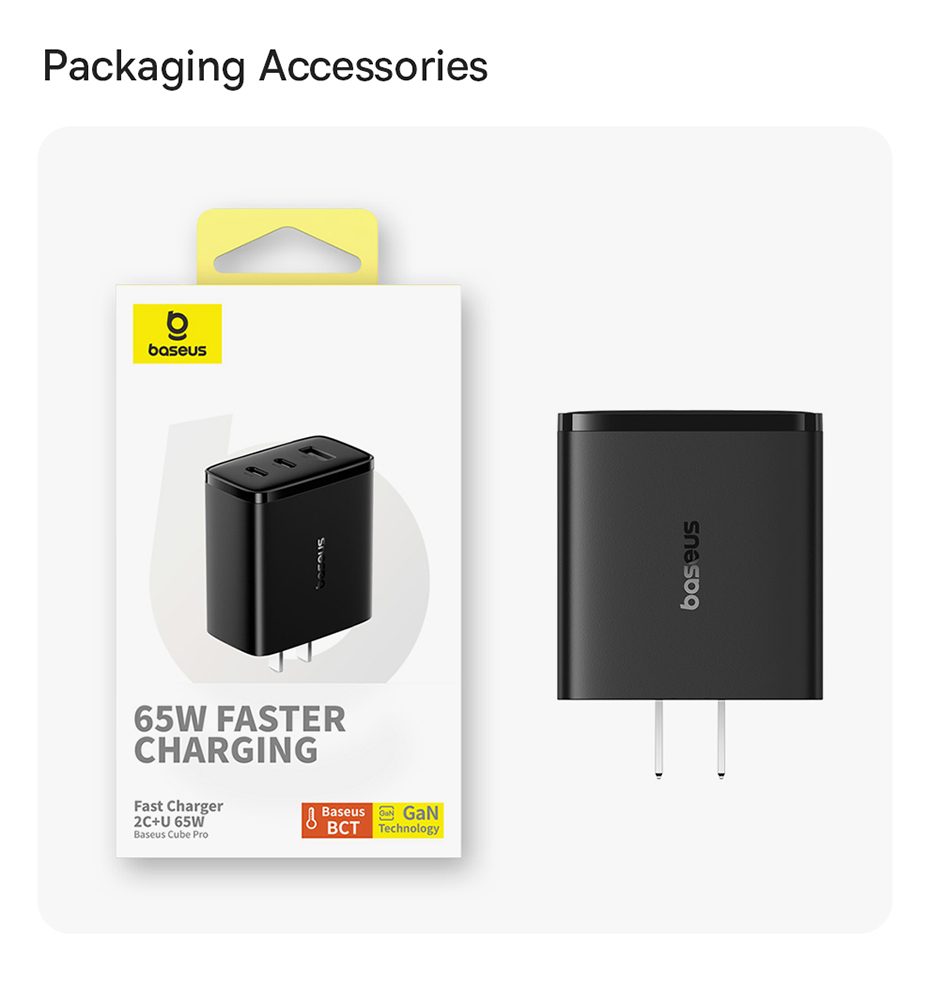
If you’ve spent any time hunting for the perfect travel charger, you know the struggle: you either carry a brick that weighs down your bag or a flimsy adapter that barely keeps your laptop alive. The Baseus 65W GaN charger initially feels like the holy grail. It’s impossibly thin, slides into a laptop sleeve without creating a bulge, and comes with a high-quality 100W E-Marker cable that justifies half the price of admission on its own.
However, once you move past the sleek exterior, the story gets complicated. The internal engineering is undeniably impressive—ChargerLAB’s teardowns highlight the use of planar transformers and thermal potting, which are the primary reasons this thing is so compact. But as AllThingsOnePlace pointed out, there is a massive disconnect between the physical design and the electrical reality. When a reviewer says, "This is one of the worst showings I've seen from Baseus on the performance side," you have to pay attention.
You are essentially choosing between a masterclass in industrial design and a disaster in power management. If you only care about how much space you save in your carry-on, you’ll love it. If you care about how much electricity this thing leaks while it’s sitting idle in your wall outlet, you’re going to be frustrated. It’s a classic case of form winning the battle, but losing the war.
Performance — what reviewers actually measured
Don't let the 65W label fool you into thinking this is a high-efficiency powerhouse. The numbers tell a story of a device that prioritizes size over energy conservation.
| Metric | Value | Context |
|---|---|---|
| Thickness | 16.6mm | Extremely pocketable |
| Weight (Slim) | 95.5g | Lighter than most phones |
| Weight (2C1A) | 116g | Still very portable |
| Power Split | 45W + 20W | Standard for dual-port |
- Idle Power Draw: This is the dealbreaker. The charger exhibits high "vampire draw," meaning it pulls significant power even when no device is connected.
- Efficiency: It fails to meet standard DOE (Department of Energy) efficiency claims, lagging behind more conservative, albeit bulkier, competitors.
- Thermal Management: Thanks to the internal potting, the heat dissipation is actually quite good for such a small unit, preventing it from becoming a fire hazard during sustained loads.
Where it actually wins
The primary victory here is pure, unadulterated portability. If you are a digital nomad or a student who lives out of a backpack, the 16.6mm thickness is a game changer. Most 65W chargers are bulky cubes that hog space; this Baseus unit is closer to the profile of a smartphone.
The inclusion of a 100W E-Marker cable is also a massive win. Most manufacturers bundle cheap, slow cables that you end up throwing in a junk drawer. Baseus includes a cable that is actually capable of handling the full throughput of the charger, which adds genuine value to the package. If you’re constantly on the move and need something that disappears into your gear, the physical engineering here is genuinely top-tier.
Where it falls short
The failure here is fundamental. As AllThingsOnePlace noted, "The adapter has no chance of meeting Energy Efficiency claims with the high idle power usage." When you leave this charger plugged into a wall, it’s working harder than it should be, wasting energy and generating heat for no reason.
This isn't just about a few cents on your electric bill; it’s about the quality of the components and the design philosophy. By pushing the limits of size, Baseus sacrificed the electrical efficiency that defines a truly "pro" grade charger. It’s a product that feels like it was designed by a team that focused entirely on the CAD drawings and ignored the multimeter readings.
Should you buy it?
Buy if you:
- Are a frequent traveler who values a slim, pocketable form factor above all else.
- Need a reliable, high-wattage charger that won't take up precious space in your tech pouch.
- Appreciate high-quality, high-wattage cables included in the box.
Skip if you:
- Are an efficiency purist who wants a charger that meets strict energy standards.
- Typically leave your chargers plugged into the wall 24/7 at home or in the office.
- Want a device that doesn't waste power when it's not actively charging a device.
A marvel of physical engineering and slim design that is severely compromised by abysmal electrical efficiency.
Sources consulted
- AllThingsOnePlace — Baseus USB A and C 30W 65W and 100w Chargers Review and Test
- ChargerLAB — Teardown of Baseus 65W GaN5 Pro Fast Charger (2C1A)
- AllThingsOnePlace — Baseus Gan5 Slim USB Power Adapter and others Review and Test
- ChargerLAB — Ultra-Slim & GaN | Teardown of Baseus 65W Charger (1A1C)
Synthesis combines independent reviews above. Verdicts and quotes attributed to original creators. Affiliate disclosure: we may earn a commission from qualifying purchases via Amazon links.
Products covered in this review
Frequently Asked Questions
Is the Baseus 65W GaN USB-C Charger worth buying?
Teardowns reveal impressive internal components like planar transformers and solid thermal potting that allow for an incredibly compact, pocketable design. However, rigorous electrical testing exposes terrible idle power consumption and subpar efficiency that fail to meet basic energy standards. It is a triumph of form factor over electrical performance.
Who is the Baseus 65W GaN USB-C Charger best for?
Frequent travelers who prioritize a highly pocketable, slim form factor above all else.
Who should skip it?
Efficiency purists and home users who leave their chargers plugged into the wall 24/7.